 Pinellas Garage Floors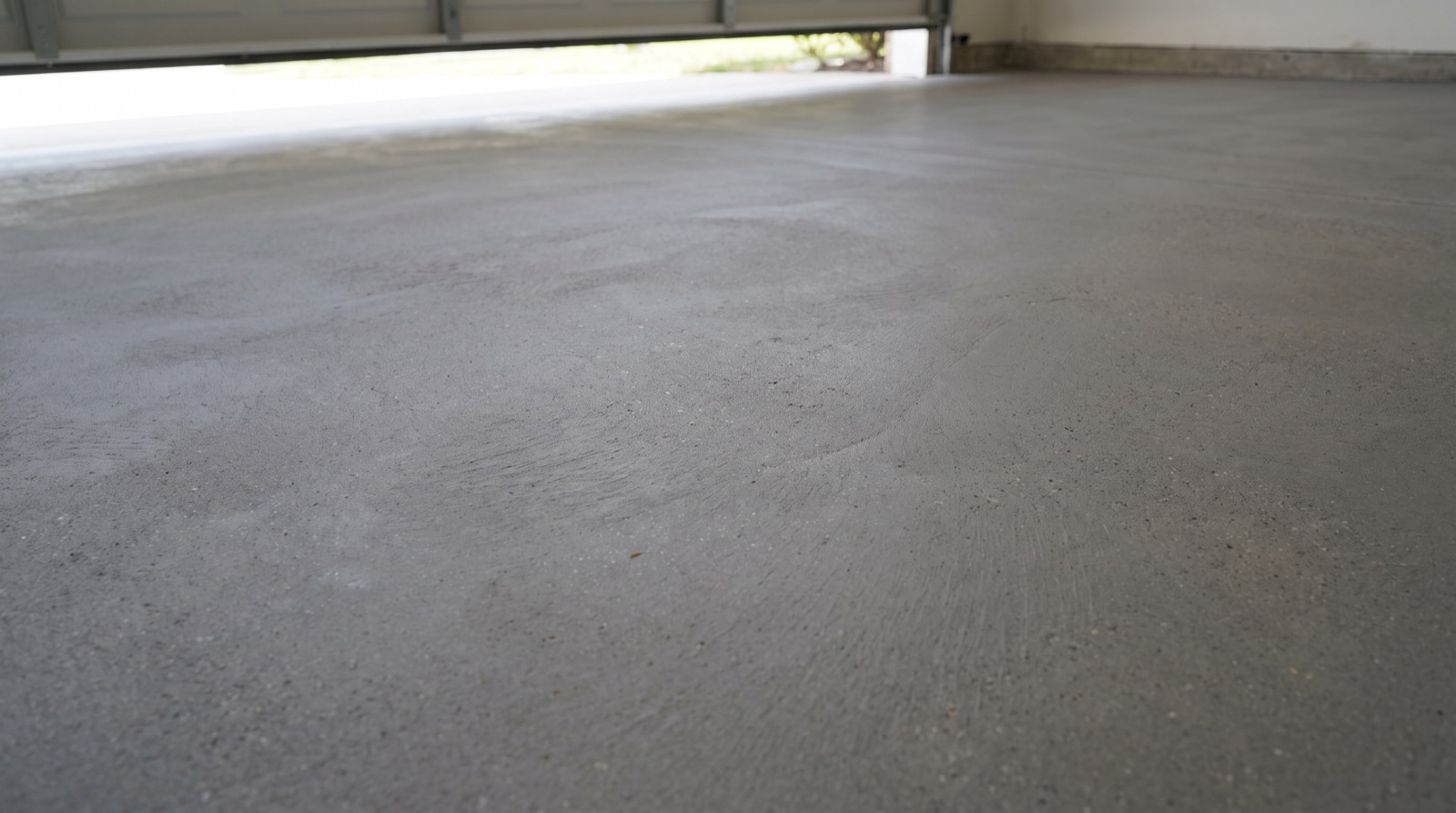
What Is Concrete Resurfacing?
Concrete resurfacing applies a new cementitious or polymer-modified layer over an existing slab to repair damage and restore a level, usable surface. It's a different process than coating: resurfacing addresses the structural condition of the concrete itself — cracks, spalling, pitting, low spots — while a coating like epoxy or polyaspartic is a protective and decorative layer applied on top of sound concrete.
Look For This
Signs Your Garage Floor Needs Resurfacing
- Surface cracks — hairline or wider cracks that go beyond what a simple caulk repair can address.
- Spalling or flaking — the top layer of concrete crumbling or flaking away, often from moisture damage or old deicing chemicals (less common in Florida, but possible from age or poor original pours).
- Pitting — small pockmarks in the surface, often from chemical spills or freeze-thaw cycles in older slabs.
- Uneven or sloped areas — low spots where water pools instead of draining.
- Old, failing coatings — a previous coating that's peeling extensively may need the slab leveled during removal and repair.
Step By Step
General Resurfacing Process
- Assessment
Determining whether the damage is cosmetic or indicates a deeper structural issue.
- Cleaning and prep
Removing debris, old coatings, and loose material from the slab.
- Crack repair
Routing out and filling cracks with an appropriate patching compound.
- Resurfacing application
Applying the resurfacing material and leveling it to the desired finish.
- Cure time
Allowing the resurfacing material to fully cure before any coating is applied on top.
- Coating (optional)
Once cured, the resurfaced slab can typically be coated with epoxy or polyaspartic like any other prepared concrete floor.
Common Questions
Concrete Resurfacing FAQs
Does every garage floor need resurfacing before coating?
No. Most sound concrete only needs mechanical prep (grinding or shot-blasting), not resurfacing. Resurfacing is typically reserved for slabs with real structural surface damage — cracks, pitting, or spalling — not just cosmetic wear.
Will resurfacing fix a cracked slab permanently?
Resurfacing repairs the visible damage and restores a usable surface, but if a crack was caused by an underlying issue like soil settling, it can potentially return over time. A contractor can assess whether further foundation work might be worth discussing.
How long does resurfacing take?
Timelines vary by the size of the area and extent of damage, and cure time before any coating goes on top. Ask your installer for a project-specific timeline once they've assessed your floor.
Is resurfacing the same as self-leveling concrete?
They're related but not identical — self-leveling underlayments are one type of resurfacing product used specifically to correct uneven or sloped floors. A contractor will recommend the right material for your specific repair.
Next Step
Not Sure If You Need Resurfacing or Just a Coating?
Request a free quote and a local professional can assess your floor and recommend the right approach.
Request a Free Quote