 Pinellas Garage Floors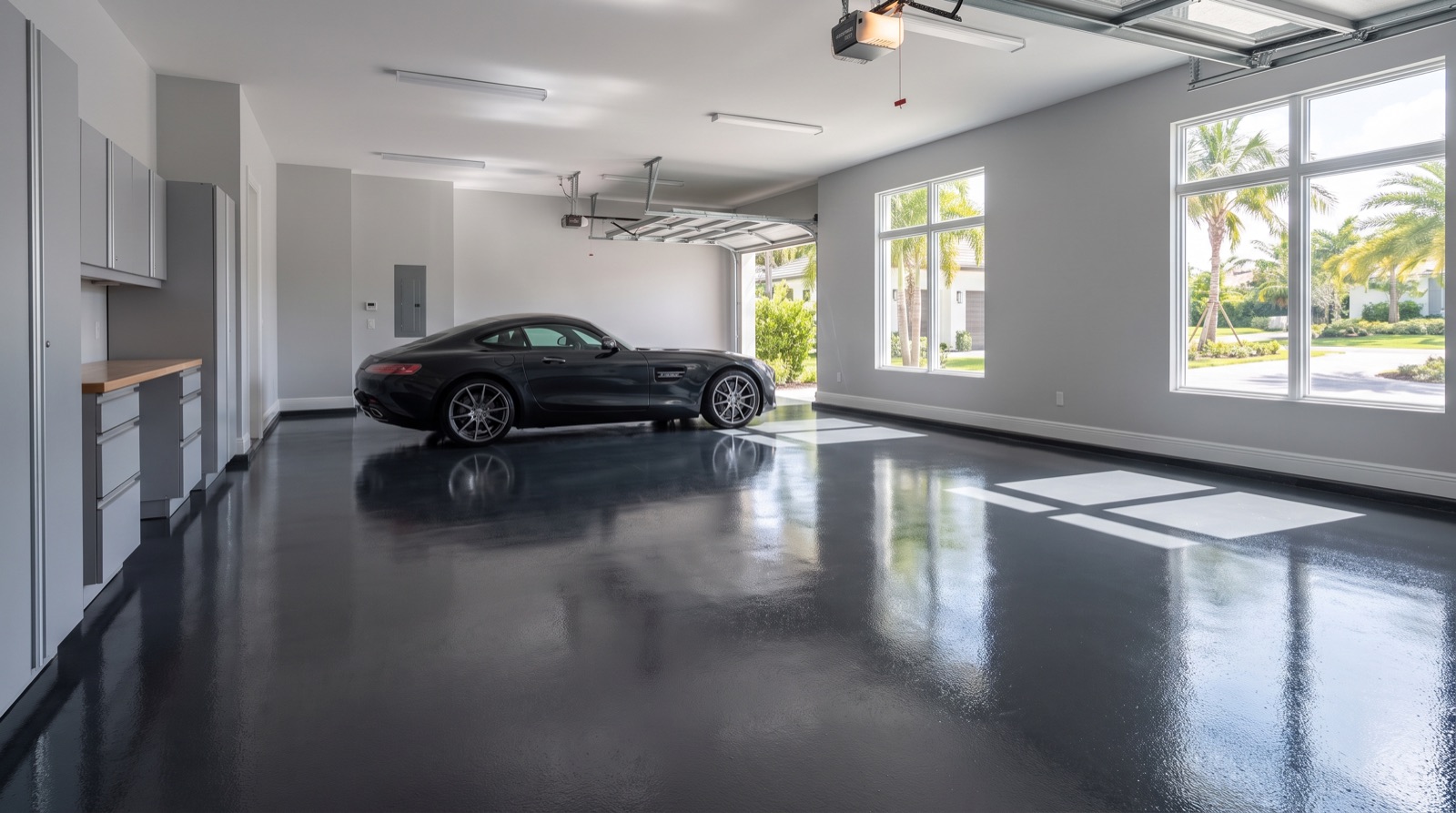
What Is a Polyaspartic Coating?
Polyaspartic is a type of polyurea coating that cures much faster than standard epoxy, in some cases within hours instead of days. It's applied in a similar layered process — primer, base, topcoat — but the chemistry reacts and hardens quickly, which changes both the installation timeline and the skill required to apply it evenly before it sets.
Side By Side
Polyaspartic vs. Epoxy: The Key Differences
Cure Time
Polyaspartic typically cures in hours; standard epoxy often needs a day or more per coat and several days before full vehicle traffic. This is the biggest practical difference for a homeowner planning around the install.
UV Stability
Polyaspartic generally resists UV yellowing better than standard epoxy, which matters for garages that get direct sunlight through the door or windows.
Temperature Application Range
Polyaspartic can often be applied across a wider temperature and humidity range than epoxy, which can matter for scheduling flexibility.
Cost
Polyaspartic materials are generally more expensive than standard epoxy, though the faster install can offset some of the difference in labor time. Get quotes from a couple of installers to compare for your specific floor.
Durability
Cured polyaspartic is hard and flexible, which can help it resist chipping and cracking compared to some more rigid epoxy systems. Like epoxy, its real-world durability still comes down to proper concrete preparation — grinding or shot-blasting the slab to open the surface — before the coating goes down. A polyaspartic topcoat is also sometimes applied over an epoxy base coat specifically to combine epoxy's build and color options with polyaspartic's UV resistance and abrasion resistance.
Common Questions
Polyaspartic FAQs
Can I really park in my garage the same day?
Depending on the product and installer, some polyaspartic systems allow light traffic within hours and vehicle traffic within a day. Ask your installer for the specific cure schedule for the product they're using.
Is polyaspartic more slippery than epoxy?
Sheen and texture depend on the topcoat and any anti-slip additive used, not the base chemistry. Ask about slip-resistant additives if that's a concern, especially for a garage that doubles as a workspace.
Does the fast cure time affect quality?
It changes the installation process — a fast-curing material gives installers a shorter working window, so experience matters. It doesn't inherently mean lower quality if the applicator is skilled with the material.
Which should I choose, epoxy or polyaspartic?
If timeline and UV resistance are priorities, polyaspartic is worth pricing out. If budget is the main driver and the garage doesn't get much direct sun, standard epoxy may be the more economical choice. A local installer can help you weigh the tradeoffs for your specific floor.
Next Step
Considering Polyaspartic for Your Garage?
Request a free quote and we'll help connect you with a qualified local professional.
Request a Free Quote