 Pinellas Garage Floors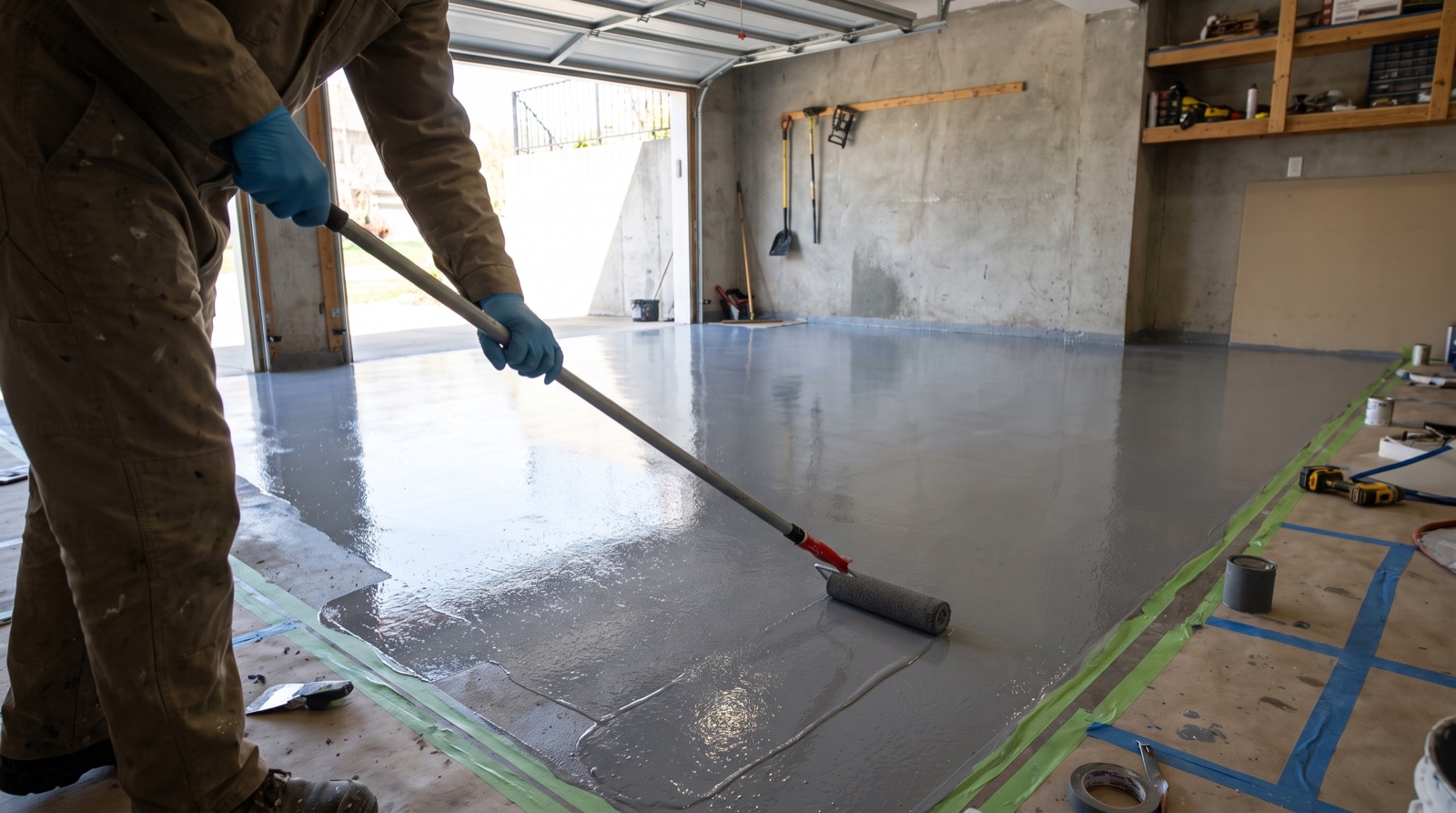
What Is Garage Floor Epoxy?
Epoxy is a two-part resin system: a liquid epoxy resin combined with a hardener that triggers a chemical reaction, curing the material into a hard, plastic-like surface. When applied over properly prepared concrete, epoxy forms a strong mechanical and chemical bond with the slab. Most residential systems use multiple coats — a primer, a pigmented base coat (often broadcast with decorative color flakes), and a clear protective topcoat.
Benefits
Benefits of Epoxy Flooring
- Chemical and stain resistance — cured epoxy resists motor oil, antifreeze, gasoline, and most household chemicals long enough to be wiped up before staining.
- Abrasion resistance — a properly cured epoxy floor stands up well to foot traffic, rolling tool chests, and vehicle tires.
- Seamless, easy-to-clean surface — no grout lines or seams for dirt and moisture to collect in.
- Design flexibility — available in solid colors, color-flake blends, and metallic finishes.
- Improved light reflectivity — glossy epoxy finishes brighten a garage compared to bare gray concrete.
How Durable Is Epoxy?
Durability depends heavily on surface preparation and the specific epoxy system used. Concrete that is properly ground or shot-blasted (not just cleaned) gives the epoxy something to mechanically key into, which is generally considered the single biggest factor in long-term adhesion. Solid-color epoxy tends to show wear patterns — often called "hot tire lifting" or burnishing — sooner than flake or quartz systems, which hide traffic wear more effectively. A moisture vapor test is also worth asking about, since Florida slabs can have elevated moisture that affects adhesion over time.
Step By Step
General Installation Process
- Inspection and moisture testing
Evaluating the slab's condition and checking for moisture vapor emission.
- Surface preparation
Mechanical grinding or diamond shot-blasting to remove sealers, oil, and laitance and open the concrete pores.
- Crack and pit repair
Filling and patching any damage before coating begins.
- Primer coat
Applied to promote adhesion between the concrete and the epoxy system.
- Base coat
The pigmented epoxy layer, sometimes broadcast with decorative flakes.
- Topcoat
A clear protective layer, often epoxy or polyaspartic, for added durability and sheen.
- Cure time
Light foot traffic is often possible within a day or two, but full chemical cure for vehicle traffic typically takes several days to a week depending on the product and conditions.
Exact timelines and products vary by installer — ask any contractor you're considering to walk through their specific prep and application process.
Common Questions
Epoxy FAQs
How long does epoxy take to cure before I can park in the garage?
Light foot traffic is often fine after 24–48 hours, but most epoxy systems need several days to a week of cure time before they can handle full vehicle weight without marking.
Will epoxy yellow in sunlight?
Standard epoxy can yellow or amber over time with UV exposure, which is more of a concern near garage doors or windows that get direct sun. UV-stable topcoats or a polyaspartic topcoat can reduce this.
Can epoxy go over an existing painted or sealed floor?
Generally no — old paint or sealer needs to be mechanically removed first so the new epoxy can bond directly to the concrete. Coating over an unprepared painted floor is one of the most common causes of peeling.
How do I maintain an epoxy floor?
Routine sweeping and occasional mopping with a mild, non-acidic cleaner is typically enough. Avoid harsh solvents and abrasive pads, which can dull the topcoat over time.
Next Step
Considering Epoxy for Your Garage?
Request a free quote and we'll help connect you with a qualified local professional to evaluate your floor.
Request a Free Quote